REEV SAEINDIA
Loading
Towards a carbon neutral world
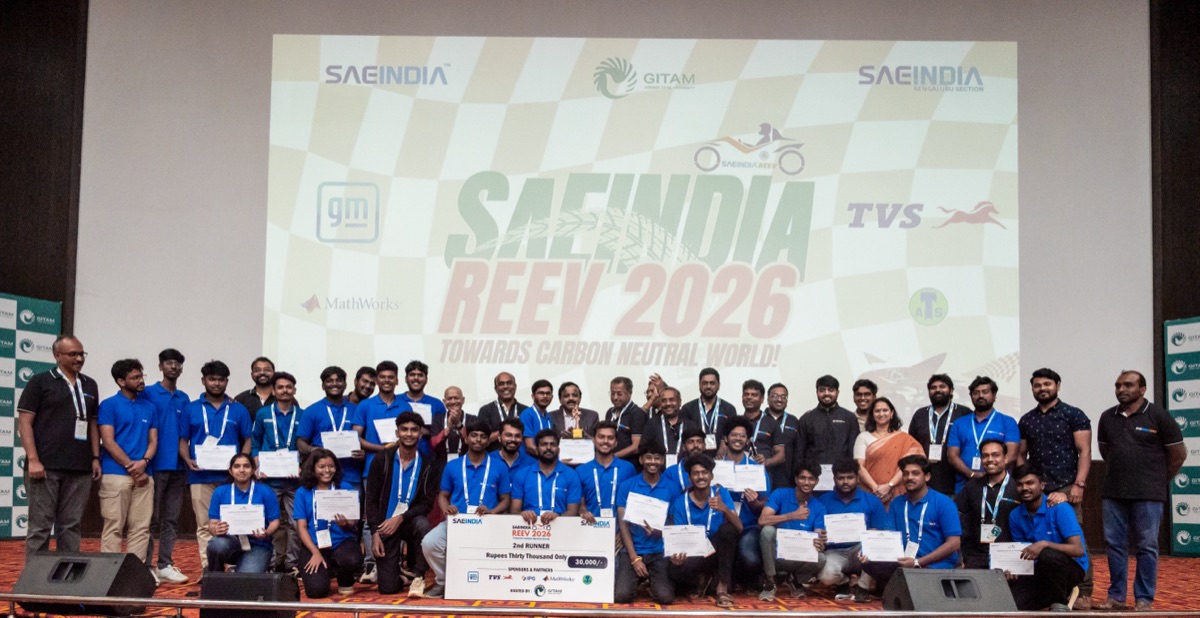
REEV — Range Extended Electric Vehicle — has run continuously since a 2019 awareness workshop, growing edition on edition into an OEM-style vehicle development competition built around range and fuel efficiency. Three editions in, the 3rd wrapped at GITAM University, Bengaluru with a 2nd Runner-up finish and record participation.
REEV 4.0 marks the biggest shift yet: a standardized engine and motor spec, a dual-battery energy layer under Open VCU software control, and a competition that now rewards control strategy as much as fabrication. Students from Computer Science, Electrical, Electronics, Mechanical, Automobile and Production backgrounds form a single cross-functional team, mentored end-to-end by working industry engineers.
The season opens with 13 confirmed technical sessions across 5 partner organizations — IPG CarMaker and ANSYS simulation, battery systems, electric drives, vehicle safety and more — then moves into REEV Virtuals: teams present their preliminary design and simulation results to a judging panel, defending propulsion readiness and control strategy on paper first.
Ahead of any vehicle build, teams also submit bench video proof of a working hybrid powertrain — the Hybrid Bench checkpoint — confirming the series-hybrid architecture actually runs before it goes on wheels.
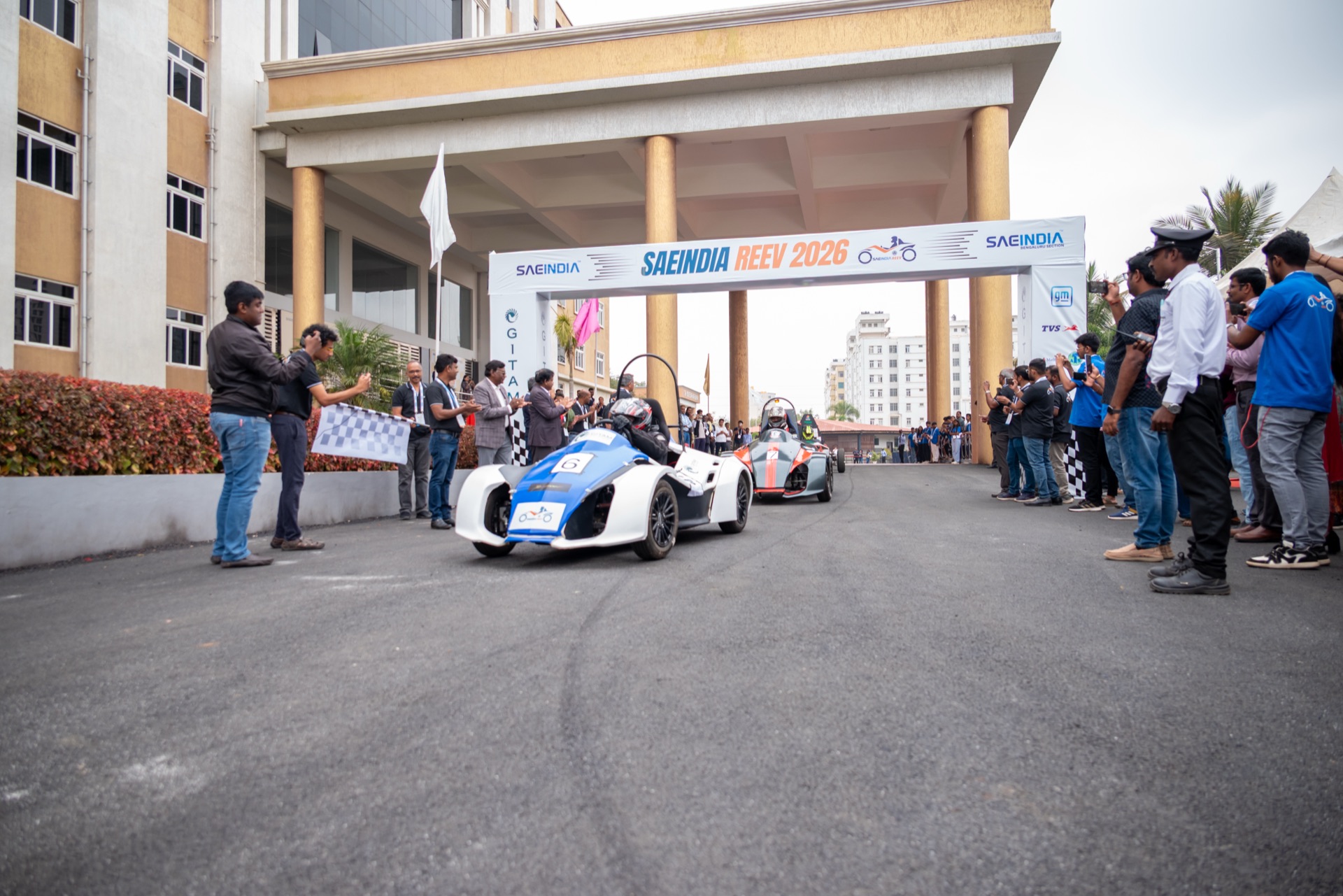
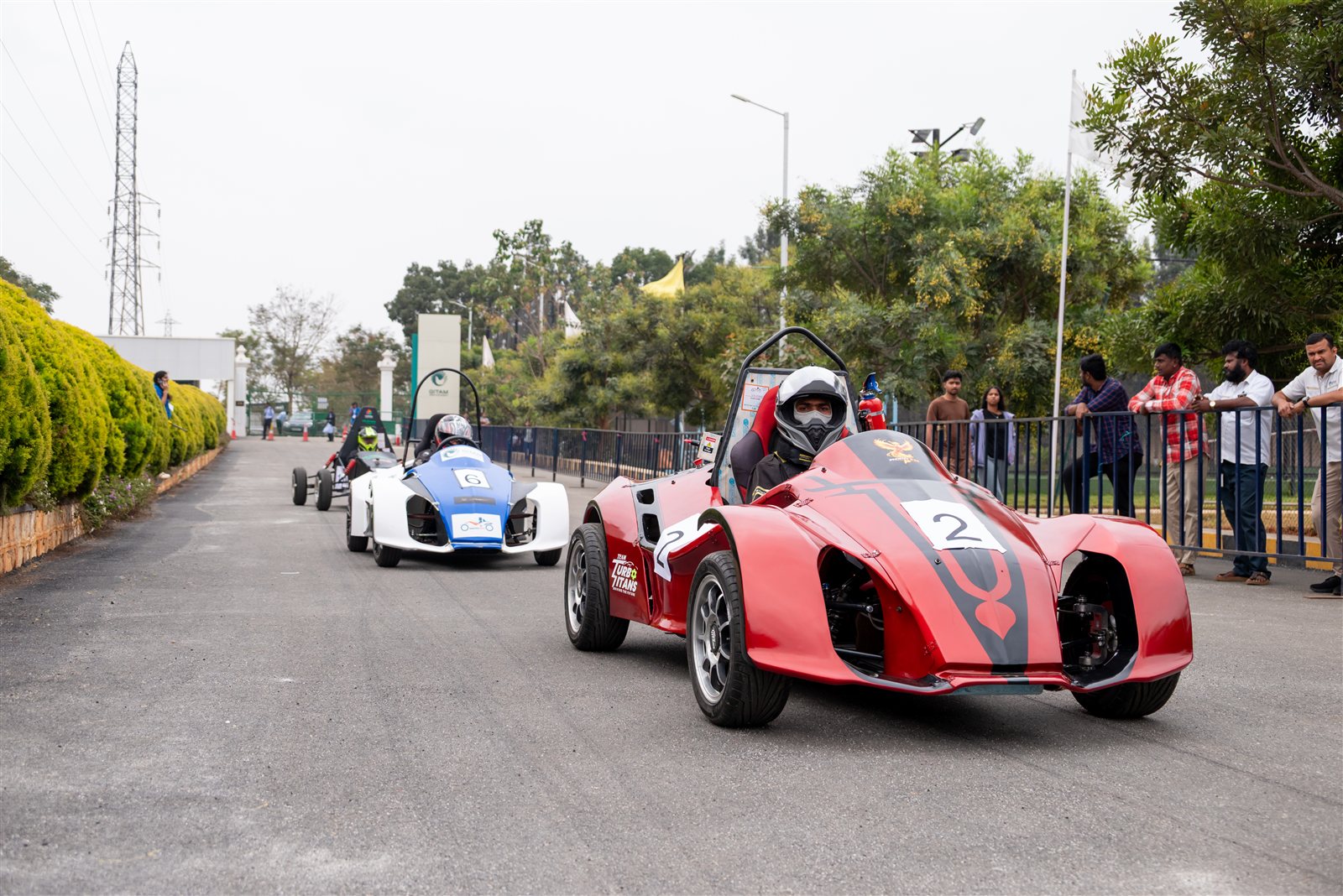
Teams bring their completed, fabricated vehicle to the finals venue for safety scrutiny and technical inspection, then a dynamic run in front of the jury — the same on-ground rigor as the last three editions, now judged against the REEV 4.0 architecture standard.
Winners take home cash prizes, a Best Margdarshak (Faculty) award, and — for many — a direct line into HR conversations with the mentoring companies behind the season.
REEV is built to give students a genuine run at OEM-style product development — not a resume line.
Two dedicated mentors per team, drawn from working engineers at OEMs and Tier-1s.
Hands-on time on IPG CarMaker, ANSYS and MATLAB/Simulink — the same tools OEM teams use.
Battery systems, energy management and software-defined vehicle control, in one build.
Requirements, design, simulation, integration and validation — a full OEM-style cycle.
Hardware and software have to work together — teams learn to design across that boundary.
Cross-functional teams spanning six engineering disciplines, run like a programme office.
Mentoring companies engage directly with participants after the finals — a real career pipeline.
Cash prizes, a Best Margdarshak (Faculty) award, and stage-wise recognition through the season.
REEV 4.0 is a continuous experiential engineering journey, not a single-day competition.
13 confirmed technical & software sessions across 5 partner organizations — EV/REEV fundamentals, vehicle dynamics, CAD/CAE, battery & powertrain, IPG CarMaker, MATLAB/Simulink, controls, safety and validation. Outcome: the foundation to engineer a REEV. See the full lineup ↗
Teams convert learning into a virtually validated REEV concept — requirements, architecture, energy calculations, powertrain sizing, CAD/CAE, vehicle simulation, dual-battery strategy, control modelling, DFMEA and design reviews. Outcome: a technically justified vehicle architecture, ready for integration.
Hardware-software integration of the engine-generator, batteries, BMS, AIRs, charging system, Open VCU and controls — energy flow, switching logic, SoC management, communication, safety interlocks and fault handling, all evaluated on the bench. Outcome: a validated hybrid energy-management system before vehicle integration.
Complete vehicle integration, then static and dynamic evaluation — safety, range extension, efficiency, performance, intelligent energy management, reliability, innovation and technical defence. Outcome: a functional REEV, and proof of the team's engineering capability.
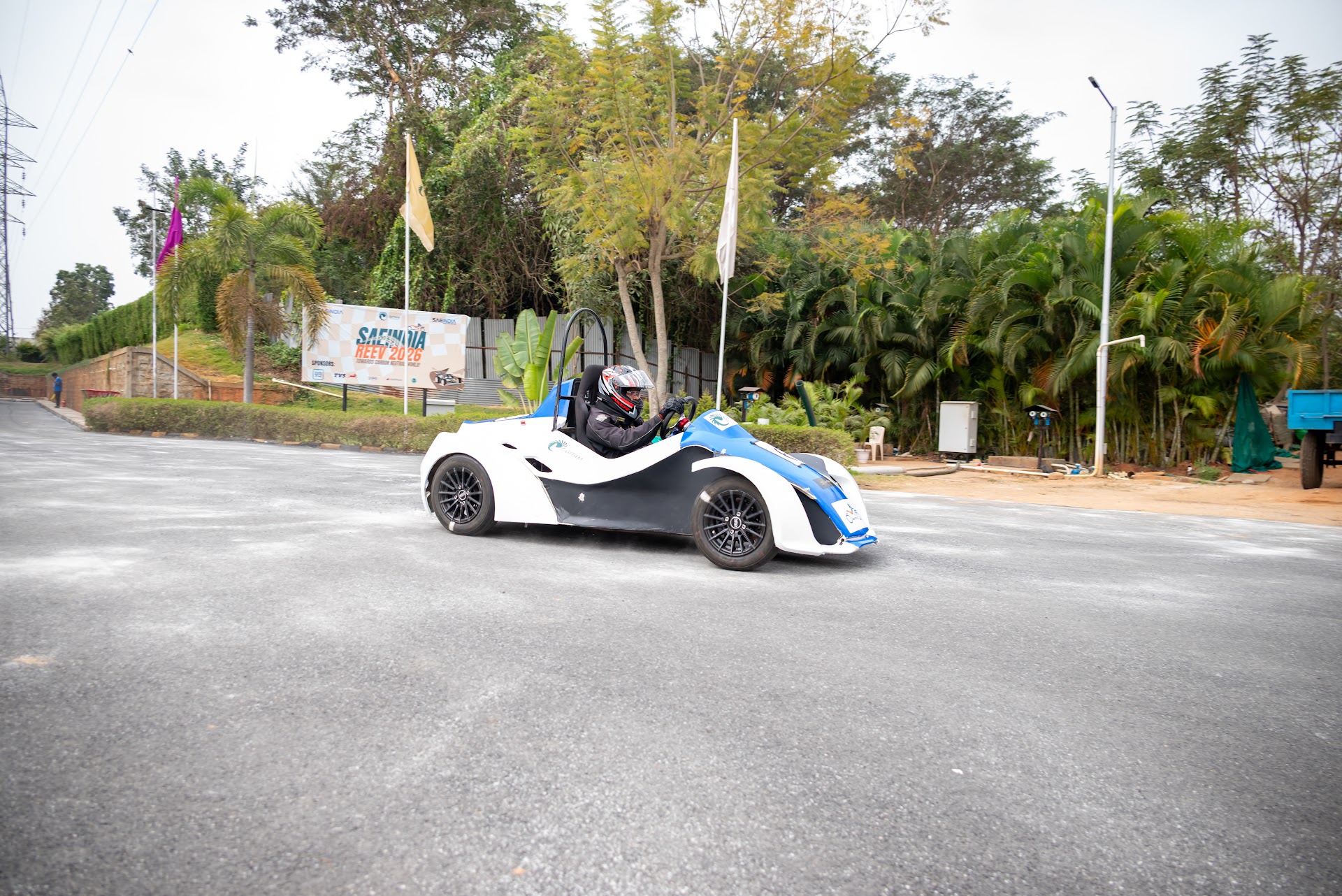
REEV 4.0 is a Series-Hybrid Range-Extended EV: the electric motor is the sole source of propulsion, while a standardized engine-generator set tops up a dual-battery energy layer switched automatically under Open VCU software control. With hardware now standardized across teams, the competition rewards control strategy as much as fabrication.
Indicative dates for the 2026–27 season — final gate dates are published as they're confirmed.
Evaluation runs continuously across the season, not just on finals day.
Design reviews and feedback checkpoints run throughout the season, so teams improve edition-on-edition instead of being judged on a single result.
REEV has run continuously since a 2019 awareness workshop, growing edition on edition to a 3rd Edition finish at GITAM University with record participation — and now REEV 4.0's standardized, software-first architecture.
See the full REEV Journey →Following the competition, mentoring companies engage directly with final-year participants — the same industry engineers who guided a team through the season often become the first HR conversation after it ends. It's a career pipeline built on hands-on evidence, not just a resume line.
REEV let me put vehicle design on one side and classroom theory on the other, and watch them meet. Getting real industry exposure — two dedicated mentors per team, pushing us to communicate clearly and deliver on time — is something no lecture hall gives you.
For registration queries, technical session details, or sponsorship conversations — reach the team directly.
Pick a category and fill in the form that appears.